
Over the years, her jewelry had slowly become scattered across multiple locations—tucked into bags, hidden in boxes, and mixed together in drawers.
Read moreFrom Lived-In to Photo & Guest-Ready in Just One Day
In just 6 hours, our organizer Marianne helped the client get fully packed and settled for his move—while also transforming the kitchen (and a few additional spaces) into a guest-ready environment.
Read moreA Kitchen Reset During a Season of Change
With a few gentle nudges, Kathy did a surprisingly good job releasing items that no longer served her. Even more encouraging? She began making decisions on her own in another room — a clear sign that confidence was building.
Read moreThe Pros and Cons of Renting a Dumpster for Decluttering Your Home
When people are facing a big home clean-out—whether it’s a basement, garage, attic, or whole house—one of the first ideas they consider is renting a dumpster. It sounds appealing: put one in the driveway, toss stuff in, and it goes away when you’re done.
But if you’ve ever done a serious declutter, you know that a dumpster isn’t always the best tool for the job.
In our experience, dumpster rentals come with more downsides than benefits for most organizing projects — especially residential ones. Here’s why.
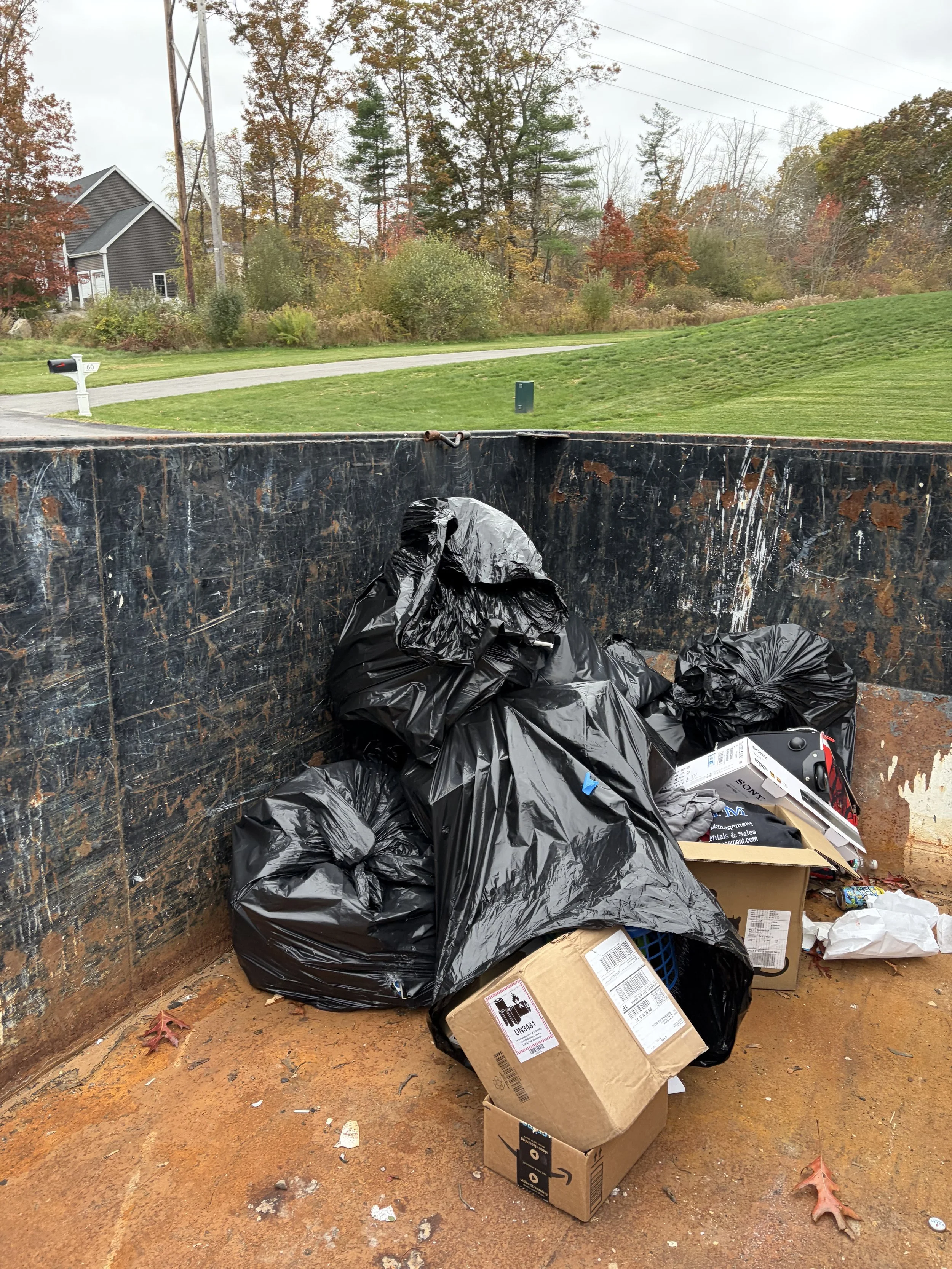
1. A Dumpster Doesn’t Come With Help — Just Space
The biggest misconception is that renting a dumpster somehow makes the job easier. It doesn’t.
Renting a dumpster gives you a big metal box — not people to decide what goes in it or to lift heavy items for you. You still need to:
make fast decisions about what stays and what goes, and
physically carry every item from wherever it is in the house into that dumpster.
And hauling things—especially heavy furniture, mattresses, appliances, or boxes—takes strength and time. If you don’t have help, you might find yourself paying professionals (often around $150–$200/hour for two people) just to do the heavy lifting. That can easily wipe out any savings from renting the container itself.
2. Dumpster Rental Costs Add Up Fast
For a standard 15-yard dumpster — that mid-size bin you see in most driveways for home cleanouts — the rental alone is often around $500 for 7–14 days.
Note on size: A “15-yard” dumpster refers to how much volume it holds — not a literal 15-yard length. Most 15 yard dumpsters are about 14–16 ft long, 7–8 ft wide, and 4–5 ft tall. Dumpsters
You also need to think about:
extended rental days ($$$ if your project drags on),
over-weight fees,
possible permits for street placement, and
damage to your driveway (which some companies charge extra to repair).
So while “$500” sounds straightforward, the true cost of using a dumpster often ends up higher.
3. You Have to Load It Strategically
A dumpster is just a box — so how you load it matters.
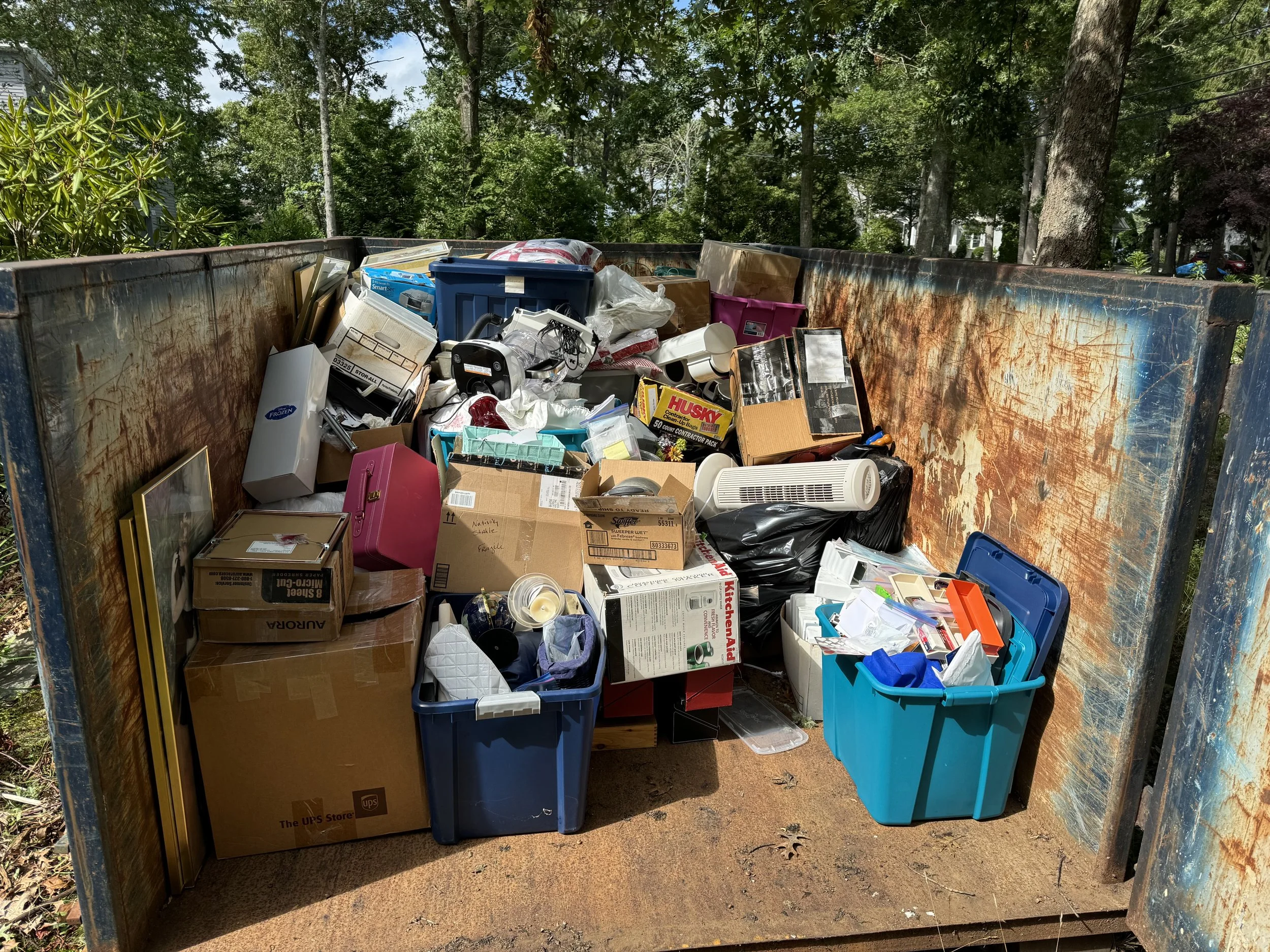
This dumpster has been strategically loaded by Team Peace.
If you just toss things in randomly, you’ll waste 30%–50% of the available space. Most homeowners don’t instinctively pack like a Tetris master, so they end up paying for a dumpster that’s only half full.
To use the dumpster efficiently, you have to:
think about item shapes and stacking,
strategically place things so you don’t waste vertical space, and
keep the load even so it can be hauled away.
This planning and loading takes patience and time — and most people underestimate how much.
4. Placement Can Be a Real Challenge
Before the dumpster arrives, you have to decide where it will sit.
Ideally it’s close to the part of the house you’re decluttering — but that’s rarely practical. Driveways have cars parked on them, there may be trees or landscaping obstructions, and narrow walkways make placement tough.
If it can’t go near the door you’re working out of (basement bulkhead, garage side door, back door, etc.), you’re suddenly making dozens of long hauls across the lawn or driveway with heavy bags and furniture.
That extra distance adds up in time, sweat, and frustration — and because dumpster rentals are priced by time, not usage, you’re still paying while you work.
5. Strange Things Happen in Neighborhoods…
It’s more common than you’d think: dumpsters sitting in driveways attract attention. Neighbors (and sometimes random people driving by) will toss stuff into your container at night.
Some of it is harmless — old furniture, yard waste, boxes — but it can fill the bin faster than you expect and take up space you needed for your own clean-out. This isn’t a reason to avoid dumpsters altogether, but it does add an unpredictable downside that many homeowners don’t think about.
6. Most People Don’t Use the Dumpster Efficiently
Human nature is to delay big decisions. If you rent a dumpster at the beginning of the month, intending to declutter over time, what usually happens is:
You don’t touch it for weeks.
Then suddenly, in a rush at the end of the rental period, you scramble to fill it.
That means you waste days of paid rental time just sitting there — a dumpster full of potential that you didn’t use. Without structure and deadlines, the dumpster becomes a passive receptacle rather than a tool that moves your project forward.
When a Dumpster Rental Can Work
There are rare situations where a dumpster makes sense:
✔ You have a tight deadline and a team ready to load it every day.
✔ You’re doing structural renovation debris that junk haulers won’t take.
✔ Your project requires disposing of lots of heavy, non-reuseable waste that can’t easily go into a truck.
Even in those cases, it still requires planning, and you still need muscle and decisions upfront.
A Better Alternative: Local Junk Haulers
At Peaceful Place Organizers, we often recommend hiring a local independent junk hauler instead of renting a dumpster.
Here’s why:
✔ You Get Both Truck and Muscle
Junk haulers bring their crew, truck, and tools — so you don’t have to load anything yourself.
✔ Immediate Removal
You make the decisions first, then schedule removal. No waiting around for days.
✔ Often Cheaper Than You Think
Because junk haulers only charge for the stuff they take, you’re not paying for rental days you don’t use — and sometimes the total comes out less than a dumpster.
Many will even give you a quote from a photo you text them. They show up, load it, and take it away — that’s it.
⚠ We avoid the big chains (like 1-800-Got-Junk) because they’re usually overpriced — but many great local independents provide excellent service at fair rates.
The Bottom Line
Renting a dumpster can be tempting — but for most home decluttering projects, it’s not the most efficient or cost-effective choice.
Dumpsters require:
quick decision-making,
lots of physical labor,
strategic loading,
careful placement,
and often still additional labor help.
Instead, for most of our clients, a local junk haul service + thoughtful organizing workflow gets the job done faster, cleaner, and more affordably.
If you want help evaluating what option makes sense for your home project — dumpsters, hauling, donation planning, or all of the above — we’re right here to help. 💛
Why Professional Organizers Recommend Downsizing (or Ditching) Storage Units
Storage units are expensive, draining, and often filled with items you’ll never actually use again. Downsizing, or eliminating storage completely, not only saves you money but also frees you from the stress of dragging out decisions.
Read moreHow to Choose and Organize a Storage Unit - Tips from Professional Organizers
Still, if you are using storage, there are a few things you need to know to save yourself headaches, wasted money, and ruined belongings.
Read moreFrom Chaos to College-Ready
Closets + drawers untangled! ✨ Marianne set up a labeled system for Gwen’s two sons so packing for college is now a breeze.
Read moreStorage Unit Consolidation in Yarmouth
Everything Lisa chose to keep now fits neatly into the smaller 10x15 unit, which is easier to manage, cleaner, and far more accessible. Downsizing from her old garage-sized unit also saves her $300 per month in rental costs — a meaningful financial relief.
Read moreClothes Closet Edit & Refresh in Falmouth
Together, we scored 3 boxes of donations and conjured up a space that's so calm, you'll want to meditate in it. In the primary closet and bedroom, we whipped up an organizational oasis, categorizing items with ninja-like precision. From dresses to shoes, every piece was sorted and edited with the utmost care, because let's be real, who doesn't love a good purge?
Read moreOffice Organization and Re-Imagining
Especially useful for the client was the categorization
of greeting cards and setting up a wrapping station.
Complete Kitchen Organization in Plymouth
Team Peace organizer Debby’s session notes and b/a pics from working in Plymouth. A complete kitchen re-org.
-Sorted and edited all food/drink items and spices (lots of expired items). Re-homed items in more appropriate areas, including pantry shelves and a spice pull-out.
Kitchen Edit & Refresh in Falmouth
Behind the scenes - notes and great before/afters from a typical work session - Marianne’s work for a couple in Falmouth.
Hours worked:
- Marianne 7.5 hrs
2. List of materials used:
- bottle organizer two tiers at $11.25
- Bino 4-piece drawer organizer set at $9.48
TCS bins
- 2 XS at $4 ea
- 4 S at $5 ea
- 4 M at $7 ea
From dumping ground to useable office space in Sandwich
Medical Paperwork: Sorted into binders.
Toys & Games: Large toys removed, small games put in cabinets.
Kitchen Supplies: Organized into categories, moved out of room.
Toiletries: Grouped and stored in labeled bins out of room.
Electronics: Sorted and stored in appropriate bins.
Filing Cabinet: Sorted and reorganized files.
Organizing Garages: Maximizing Space and Functionality
The garage is a neglected space in many households. It often becomes a catch-all for various items, resulting in clutter and the inability to park cars inside. However, with thoughtful organization, garages can be transformed into functional and efficient spaces that meet the diverse needs of homeowners. In this blog post, we will explore key strategies for organizing garages, including the importance of appropriate storage, designated zones, vertical storage solutions, and avoiding storing unsuitable items.
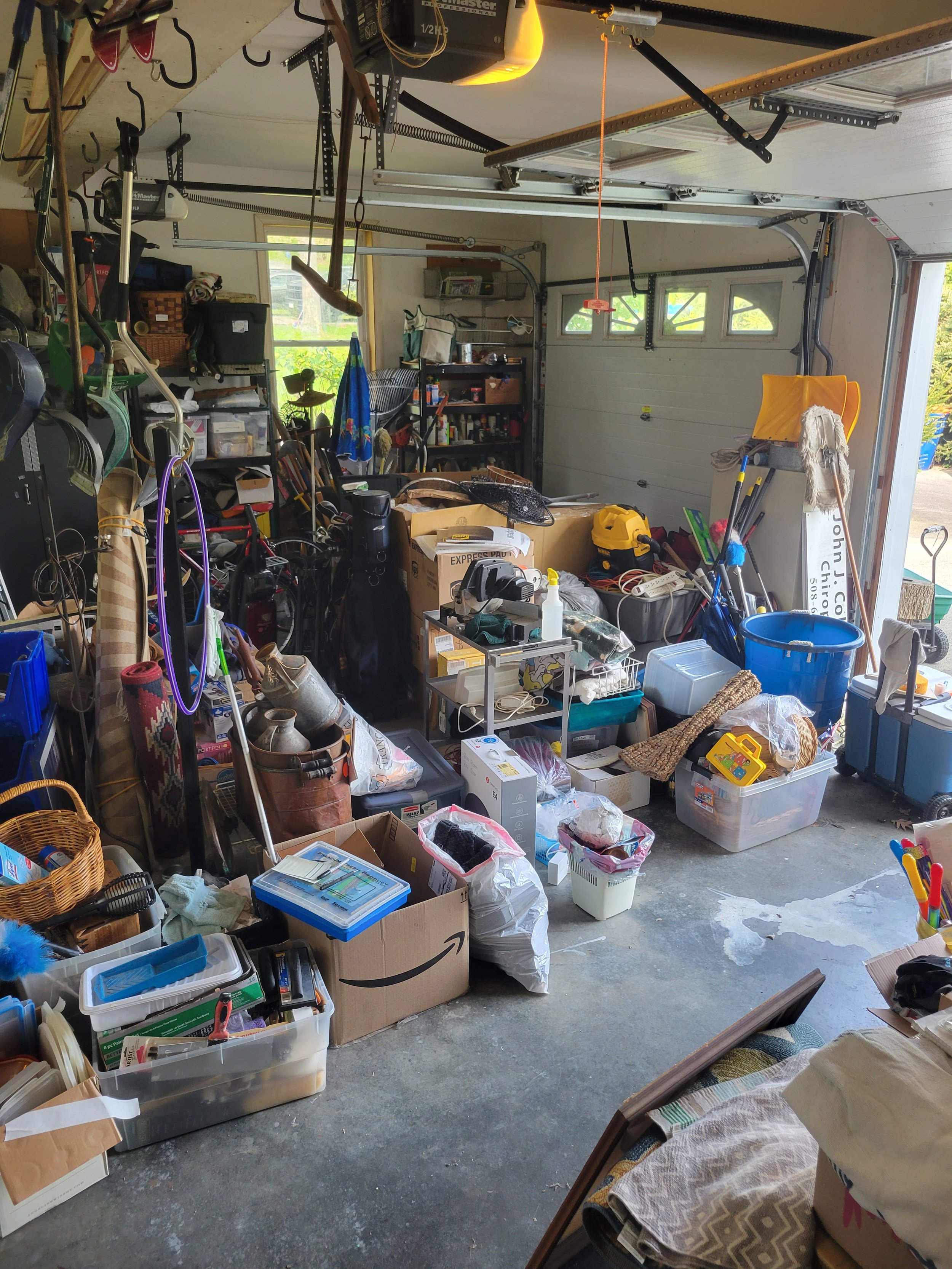
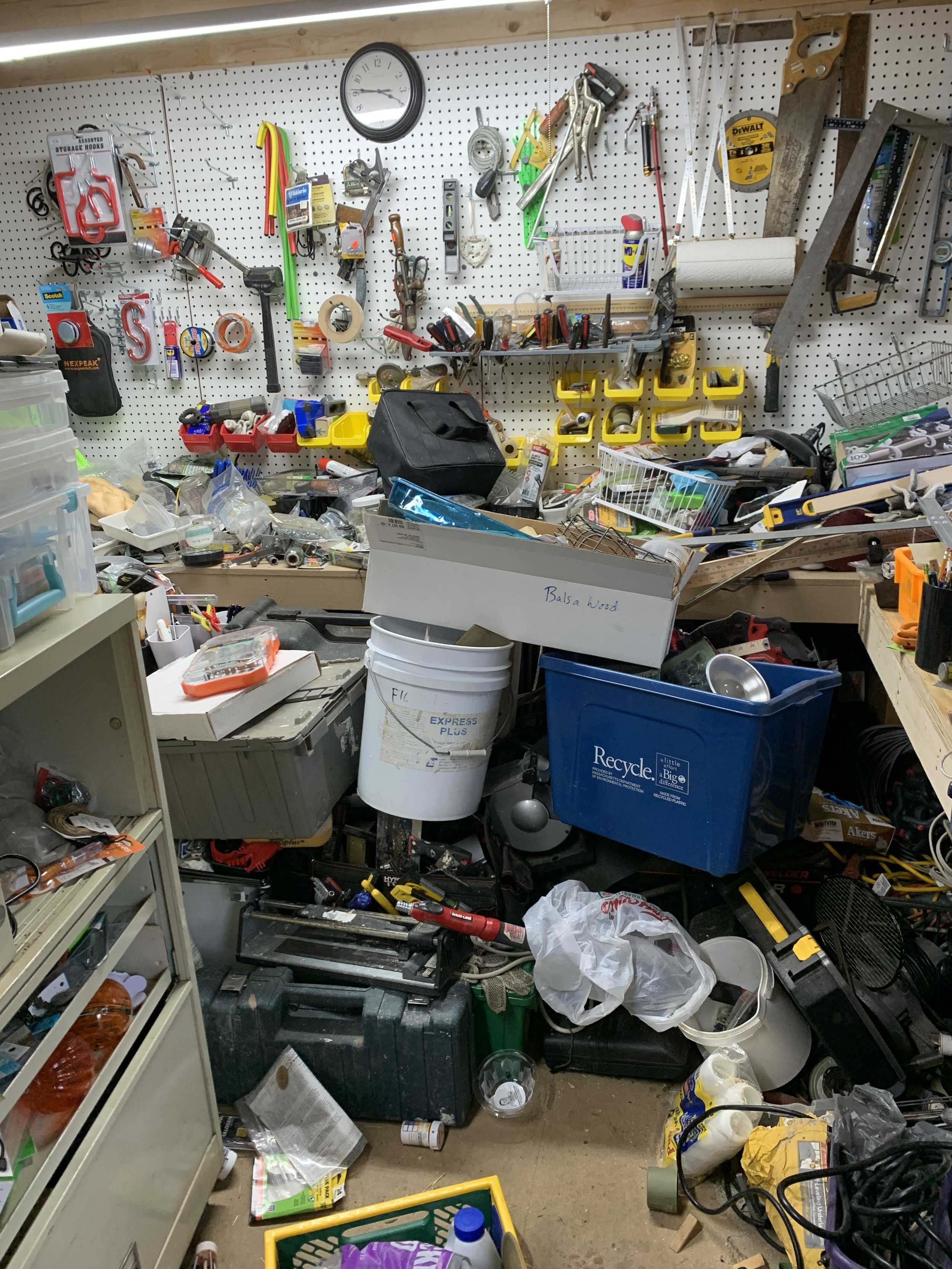

Appropriate Storage for Outdoor Items: Garages are exposed to temperature variations, moisture, and dust, making it crucial to store items that are appropriate for outdoor conditions unless the garage is heated. Outdoor equipment such as gardening tools, sports gear, and camping supplies are best suited for garage storage. Utilizing durable, weather-resistant containers or shelves can help protect these items from damage while keeping them easily accessible.
2. Create Zones for Different Uses: To make the most of your garage space, consider dividing it into functional zones based on specific activities. Common zones include gardening, beach, recreational equipment, and automotive. By establishing designated areas, you can easily locate and access the items you need without rummaging through clutter. Use labels, color-coded bins, or clear storage containers to keep everything organized and visually appealing.
3. Utilize Vertical Storage: Garages often have ample vertical space that can be harnessed for storage. Take advantage of the walls by installing sturdy hooks, pegboards, or wall-mounted shelves. These solutions allow you to hang tools, bicycles, ladders, and other items, keeping the floor clear and maximizing available space. Additionally, consider overhead storage options such as ceiling-mounted racks for seasonal items or rarely used belongings.
4. Avoid Storing Clothes, Food, or Paper: Garages are unsuitable places for storing clothing, food, or paper items due to exposure to fluctuating temperatures, humidity, and potential pest infestations. Instead, allocate space inside your home for these belongings, preferably in a designated closet or storage area. This will help preserve the quality of your clothes, deter rodents, and prevent damage to important documents or sentimental papers.
5. Tackle the Clutter: Reclaim Your Garage: Statistics show that approximately 40% of Americans cannot park their cars in their garages due to clutter. Over time, garages tend to accumulate unnecessary items, outdated electronics, or broken tools. Take a proactive approach to decluttering by sorting items into categories: keep, donate, sell, or discard. Be honest with yourself about what you truly need and what has outlived its usefulness. Consider hosting a garage sale or donating items to local charities, recycling centers, or thrift stores to ensure they find new homes. MassSave is a great resource for recycling old appliances taking up valuable space in your garage.
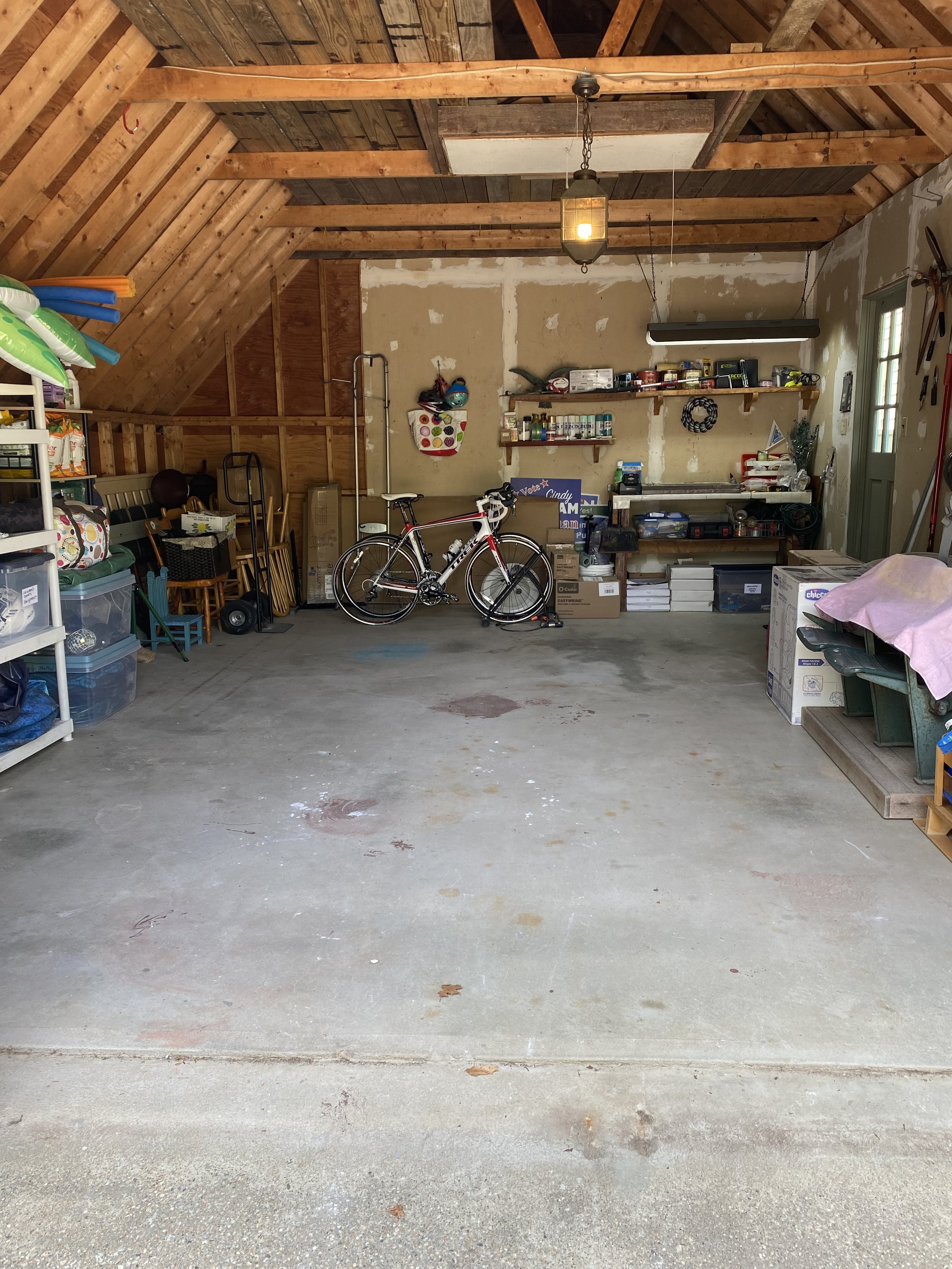
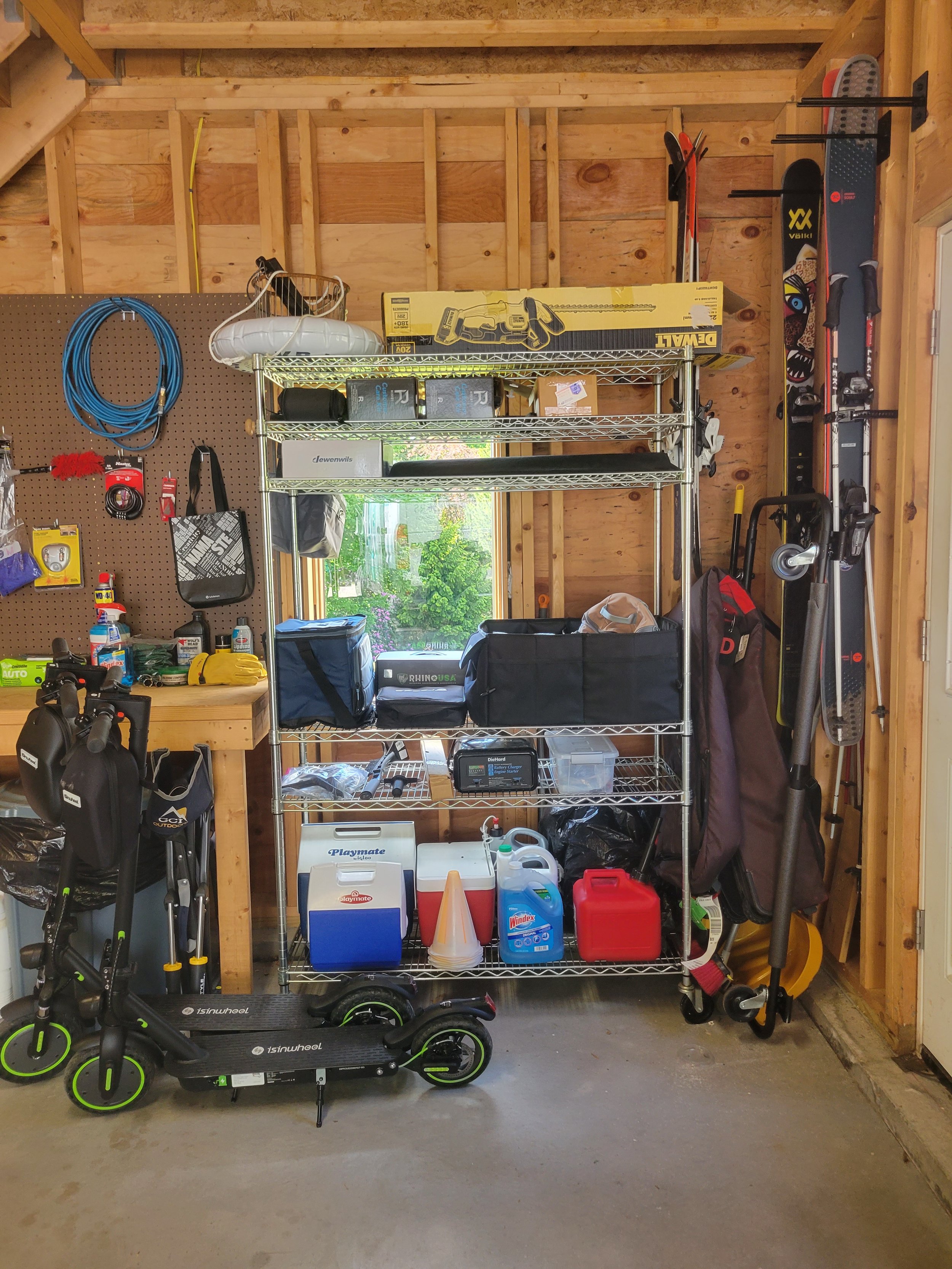
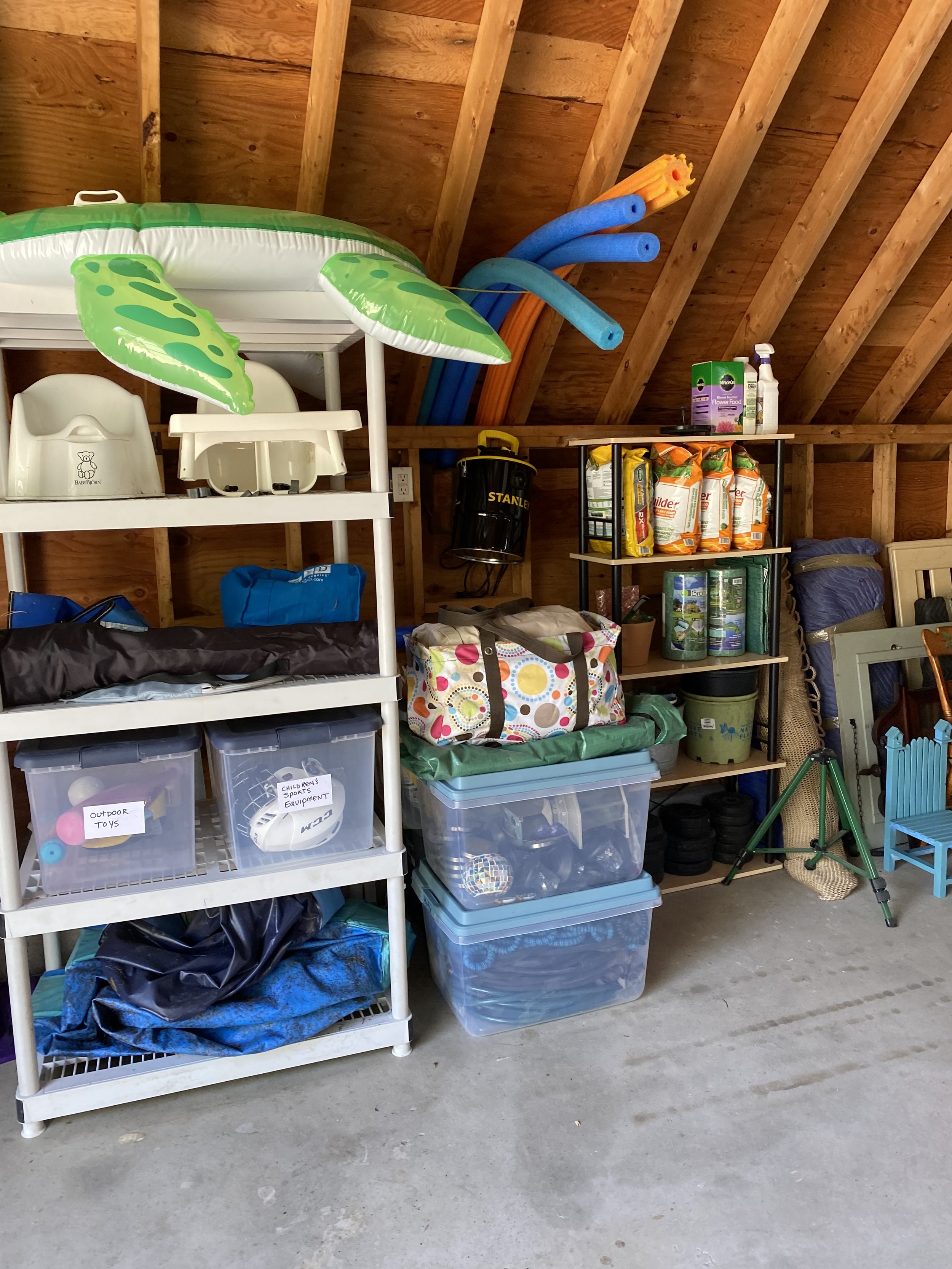
Transforming your garage from a chaotic storage space into an organized and functional area requires planning and dedication. Following the abovementioned strategies, you can optimize the available space, create designated zones for different uses, and eliminate unsuitable items from your garage. Remember, appropriate storage for outdoor items, utilizing vertical space, and avoiding the storage of clothes, food, or paper are crucial steps toward reclaiming your garage. Embrace the opportunity to park your car inside (or create a home gym) and enjoy the newfound functionality and peace of mind that an organized garage brings.
“The secret to getting ahead is getting started.”
Organizing Storage Units
Many people have storage units they don't access for months or even years. These units can become cluttered and difficult to navigate, leading to an "out of sight, out of mind" mentality. Instead of confronting the problem, people often continue to pay for the unit, even if they don't use the items inside.
Read moreSouth Shore: Custom Storage Solution
Peaceful Place Home Organizers solved this home-based business’s storage solutions with a custom made piece by Cameran.
Read moreCustom Closet Design
We understand that it can be overwhelming to organize a closet, and we are here to help! During the first step, we'll take inventory of the items that need to be kept in the closet. We'll work with you to identify what needs to stay and what can be removed. If any extra charges apply due to the editing process, we'll let you know in advance.
Read moreCape Cod: Paperwork Organization in Brewster
Retirement is an exciting time in life; it is a chance to explore new passions, spend more time with family and friends, and enjoy a slower pace of life. It is the conclusion of a professional or working career, but it can also be the beginning of a new chapter full of opportunities, adventures, and experiences. It can also be the start of FINALLY having the time to do all the little things around your home that you put off while you were working.
Read moreCape Cod: Retail Stockroom in Mashpee
As anyone who has ever worked in retail, whether it's their own business or working for a big-box store, you know how quickly things can get out of control in a stockroom, especially during the holidays.
Read moreCape Cod: From Chaos to Zillow
If you don't live locally but are responsible for the downsizing/cleaning out of a home, we will be your "boots on the ground" and perform services such as returning cable boxes and medical equipment and selling cars or boats.
You'll have a dedicated project manager who will see your project through to the end with compassion and patience.
Read more